Real-time public health assessment is an important tool to enable rapid response to disease outbreaks and health threats. However, prior to 2025, public health surveillance in Ukraine was conducted using traditional, non-digital methods that were limited in scope and speed. Additionally, the war in Ukraine created displaced populations, infrastructure breakages, and increased risk of antibiotic misuse which further stressed the public health system.
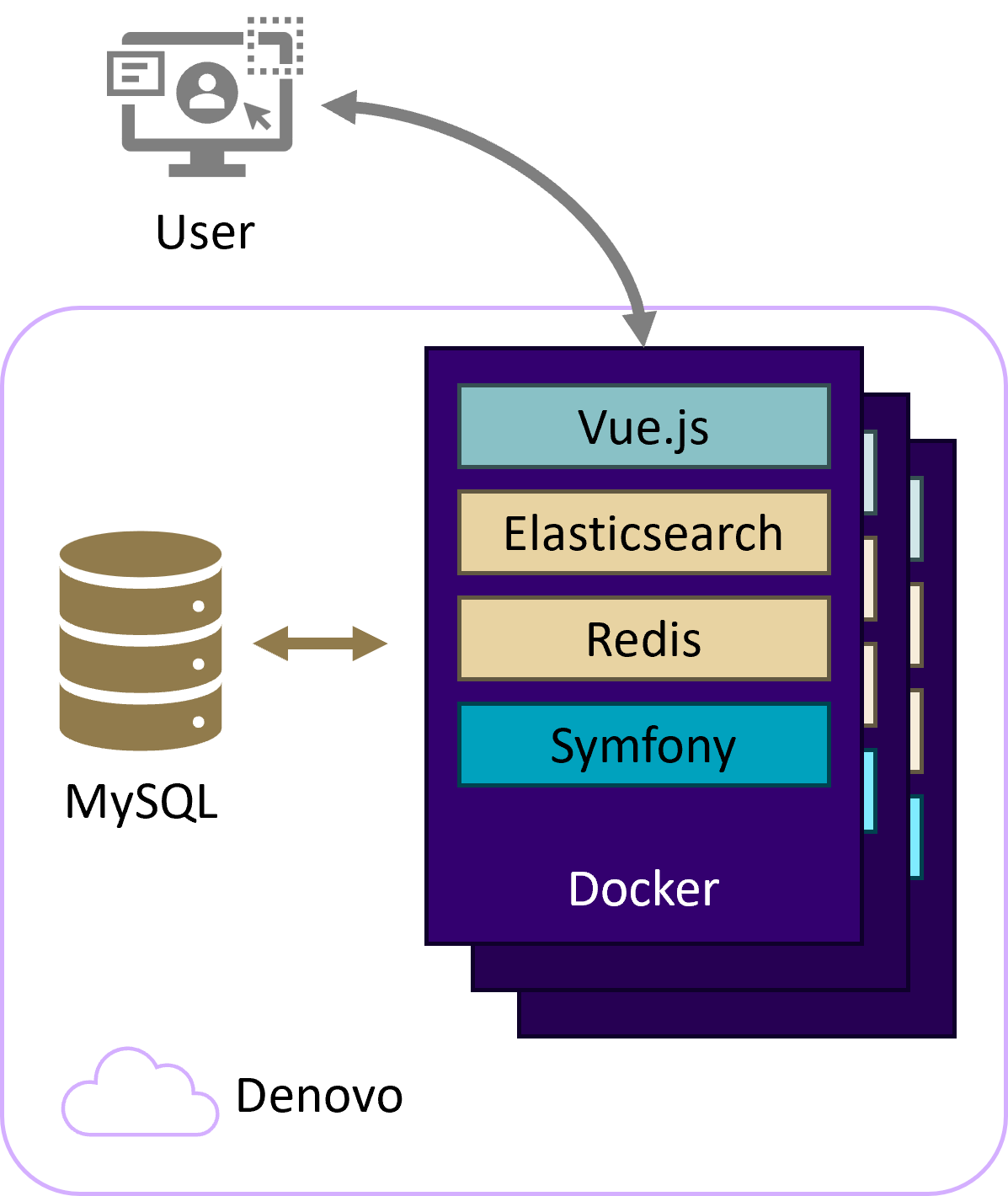
We created a new Electronic Surveillance System (ESS) that provided a unified and modular framework for digitizing epidemiological surveillance. ESS improved reliability and timeliness of surveillance data as compared to existing manual processes and enabled new types of surveillance modalities to provide improved situational awareness and the ability to quickly respond to threats to the wellbeing of the Ukrainian people.
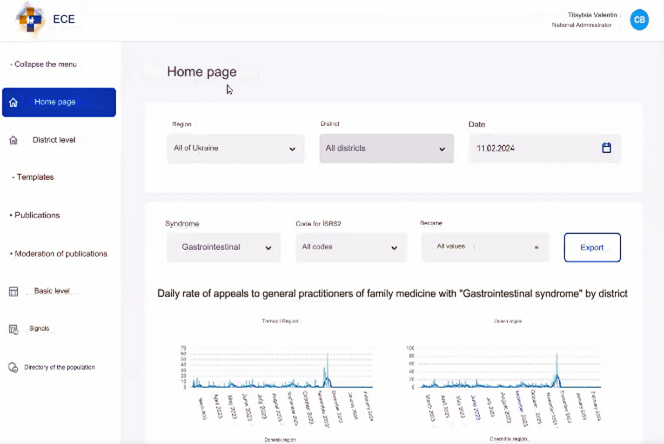
ESS is a novel, integrated, digital public health tool for Ukraine that is modular and expandable. Previously, public health surveillance for infectious diseases and sentinel surveillance relied on healthcare workers calling local health officials before this data was aggregated to the national level. This manual process introduced the potential for data errors and delays. In its enactment, ESS digitized these existing surveillance processes. ESS provided reporting capabilities directly accessible to healthcare workers to minimize delays and provided new data analysis and visualization tools to public health officials to more easily identify the potential occurrence or spread of a disease.
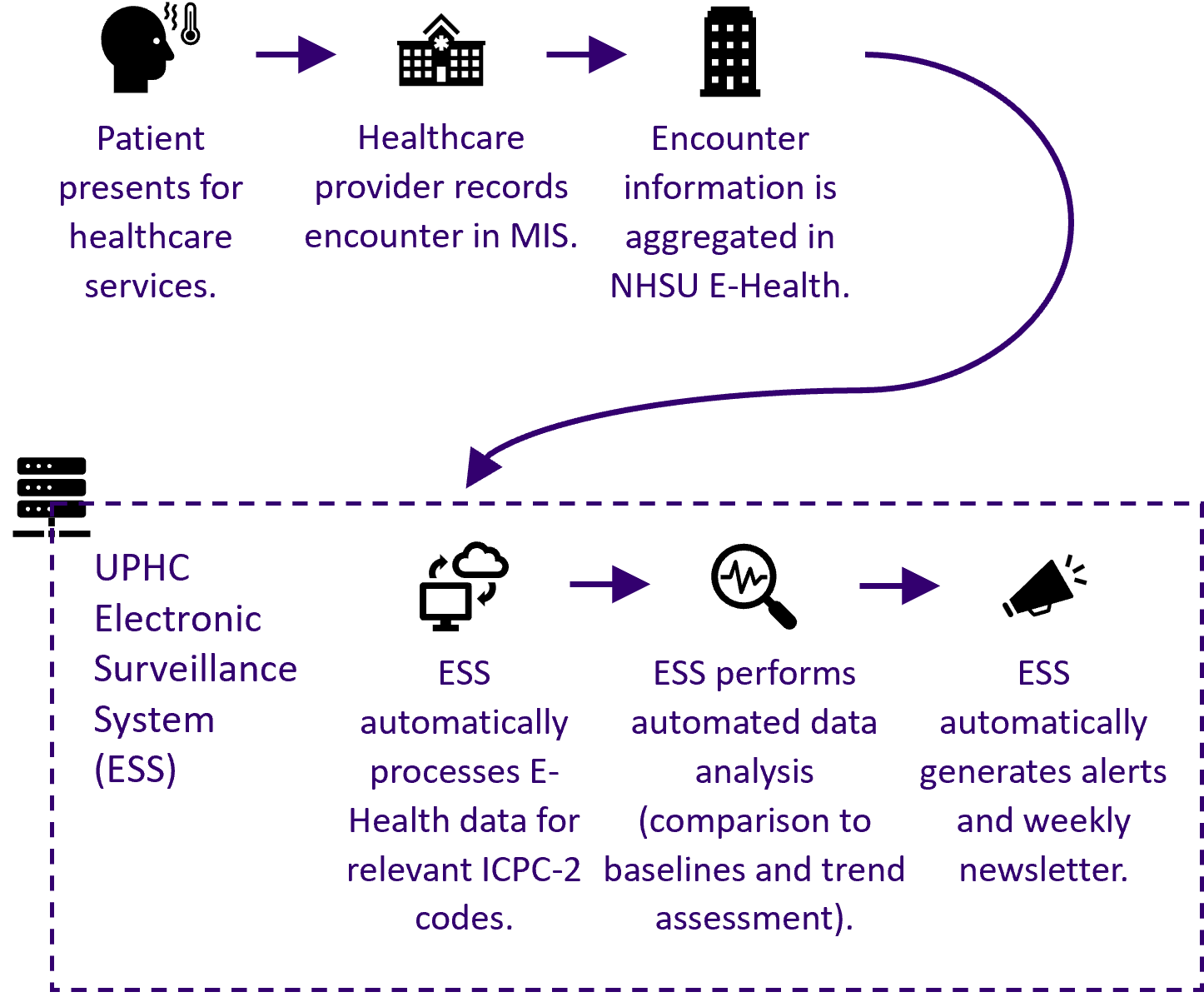
Beyond existing processes, this project and ESS’s modular design facilitated the development of additional surveillance modalities. We created one such module for syndromic surveillance. Unlike traditional infectious disease surveillance, syndromic surveillance reuses and interprets existing data sources on symptoms (e.g.: a patient with diarrhea) that may indicate public health threats, including potentially unidentified or novel diseases. ESS’s syndromic surveillance module enables data transfer from Ukrainian health insurance systems on the use of health services and includes automated processes to clean, analyze, and report on this data. As this was a novel type of surveillance in the Ukrainian context, we established new procedures and protocols for the handling of syndromic surveillance data, integration of syndromic intelligence with other forms of epidemiological surveillance, operational response to alerts at both the national and regional levels, and the system’s oversight and administration.
ESS continues to provide the foundation for new public health surveillance capabilities in Ukraine through diverse modules for different public health needs. A module was developed to report cases of occupational diseases, such as work-related injuries and exposure to environmental hazards. Another module is being developed to support antimicrobial resistance testing, to track the spread of resistant pathogens in hospitals. ESS continues to play a central role in expanding the public health capabilities of Ukraine.
- In partnership with the Center of Public Health of the Ministry of Health of Ukraine (UPHC) and the US Centers for Disease Control and Prevention (CDC).