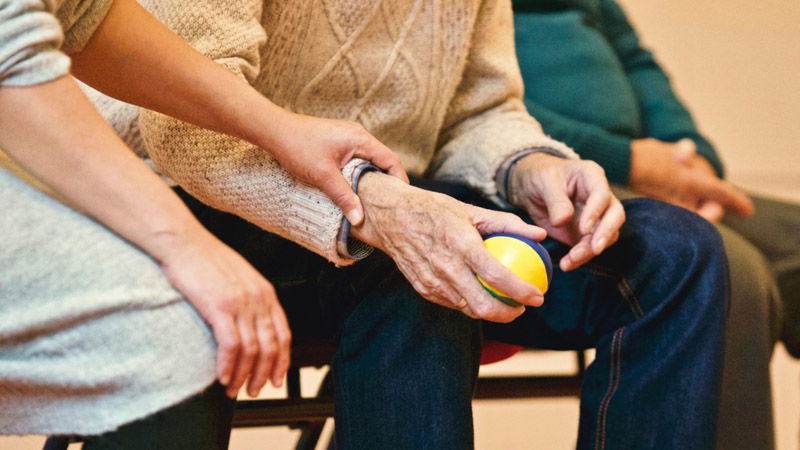
Home care workers (HCWs) are one of the fastest growing professions in the United States. Patients increasingly prefer to receive healthcare services in their own homes rather than at long-term care facilities. In addition to family caregivers, HCWs provide the instrumental and assistive care necessary to make home-living possible. Despite their importance, HCWs, who are mostly middle-aged women of racial and ethnic minority groups, are at the bottom of the healthcare hierarchy, earning dismally low wages and taking on multiple jobs to make ends meet. HCWs perform an essential and challenging job but feel under-appreciated and under-supported.
One reason HCWs are under-supported is that they do not work in a traditional clinical or office environment. Instead, they work alone in patients’ homes and often feel isolated and left to face the challenges of the job alone. In other professions, access to professional peers is an important support structure for getting work done. You might rely on peers to answer questions about how to do critical but non-explicit parts of the job. Seniors could mentor newcomers to help them learn the ropes. Peers can set the tone of the workplace, and you might rely on them for emotional support, as they can truly empathize with the challenges around the work. HCWs typically have had few opportunities to build those peer relationships in-person, a problem only worsened by the COVID-19 pandemic.
In this research, we wanted to understand how computer technologies could be designed to foster peer support for home care workers, in two questions. The first question was to understand the different peer support needs that HCWs had. We held discussion groups with 18 HCWs working in New York City and asked them to describe the types of support they currently received from other HCWs, why that support was valuable to them, and what kinds of support they wish they had. Secondly, we worked with those same HCWs to explore potential designs for technology-enabled peer support over several weeks. These discussions were focused around pre-recorded scenarios that described HCWs interacting with hypothetical technologies designed for different types of support.
- Originally published in “Medium: ACM CSCW”.